Who is Revenue Share Digital For?
I partner exclusively with a small number of serious, ambitious ecommerce stores and service based businesses (£3K AOV+) such as Driveways, Roofing, Windows & Doors, Rendering & Coatings, Solar Panels, Garden Rooms, Loft/Garage Conversions, Landscaping and Fencing/Decking and want a true marketing partner — I'm someone who doesn’t just generate sales and leads, but who shares in the risk, the work, and the upside. I can only work with a select number of businesses at any one given time. Please check below to see if your business is eligible.
How I Generate Leads on Autopilot

Step 1 - High-Converting Sales Funnel
I'll design, build, host and manage high converting sales funnel for your business that turns visitors into sales.
I'll use the exact same high-converting funnel templates that I've used to generated over $3M worth of business over the last few years.
No more static 'brochure-style' websites that don't generate laser focused, highly-qualified leads.
You'll get a high converting sales funnel and website that generates
leads on auto-pilot.
Step 2 - Laser Targeted Traffic
I'll build, manage and optimise a series laser targeted SEO, Google Ads, Meta Ads, Organic Social & Automated Email campaigns to maximise your exposure across all relevant channels to attract a steady flow of highly qualified leads.
- Google Search
- Google Ads
- Facebook Ads
- Instagram Ads
And wherever else your target audience hangs out online.

Case Studies
I can't guaranteed these results for you but it shows what could happen.
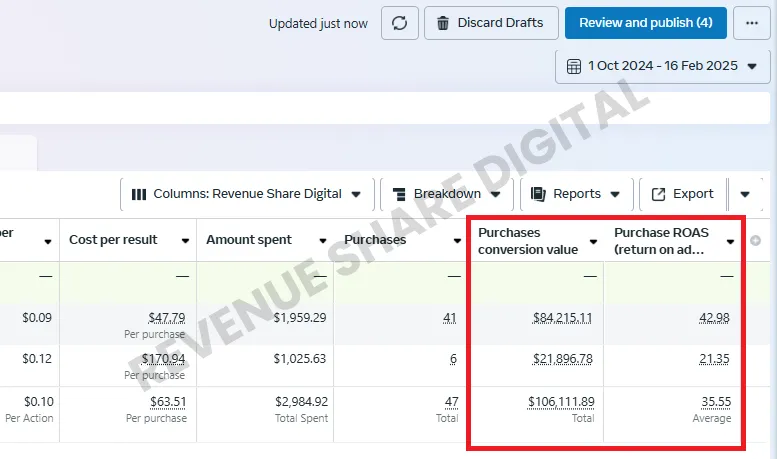
CASE STUDY
A Technology Store Has Increased Revenue by 106.1K in Just 4 Months With a 3550% ROAS
CASE STUDY
A Technology Store Has Increased Revenue by 106.1K in Just 4 Months With a 3550% ROAS
CASE STUDY
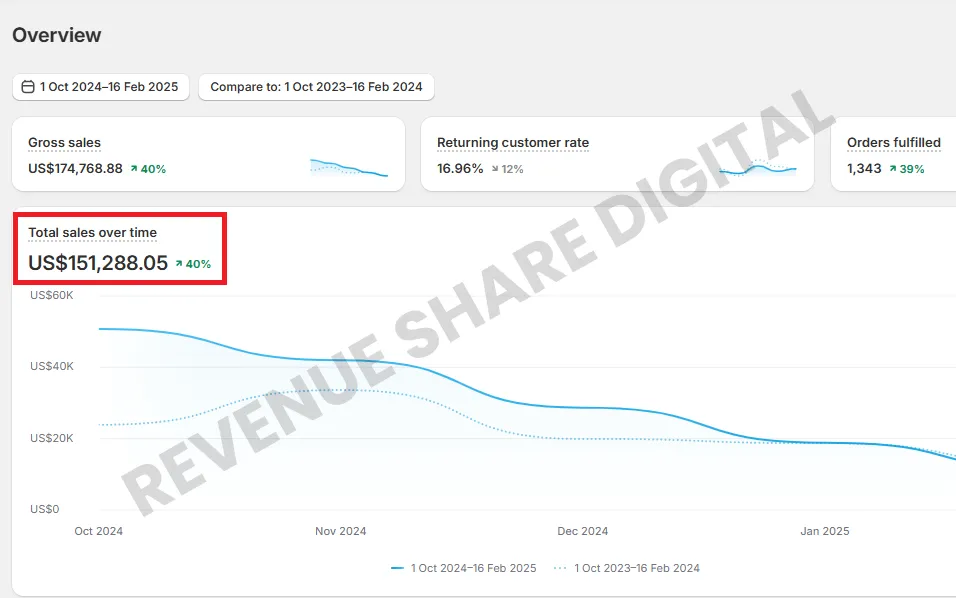
A Clothing & Apparel Store Has Increased Total Revenue by 40% in Just 4 Months
CASE STUDY
A Clothing & Apparel Store Has Increased Total Revenue by 40% in Just 4 Months
CASE STUDY
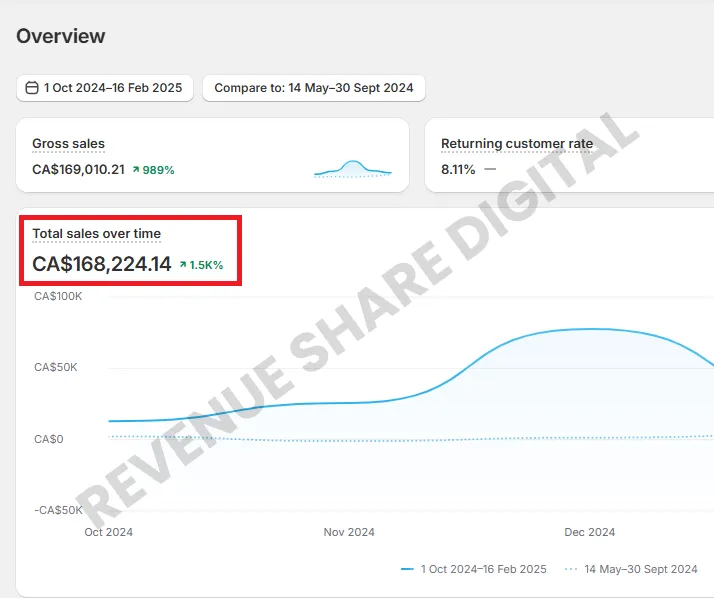
An Electronics Store Has Increased Increased Total Revenue By 1500% in 115 Days
CASE STUDY
An Outdoor Living Company Has Gone From £17K/pm To £82.6K/pm in 142 Days

CASE STUDY
An Outdoor Living Company Has Gone From £17K/pm To £82.6K/pm in 142 Days
Step 2 - Laser Targeted Traffic
I'll build, manage and optimise a series laser targeted SEO, Google Ads, Meta Ads, Organic Social & Automated Email campaigns to maximise your exposure across all relevant channels to attract a steady flow of highly qualified leads.
- Google Search
- Google Ads
- Facebook Ads
- Instagram Ads
And wherever else your target audience hangs out online.
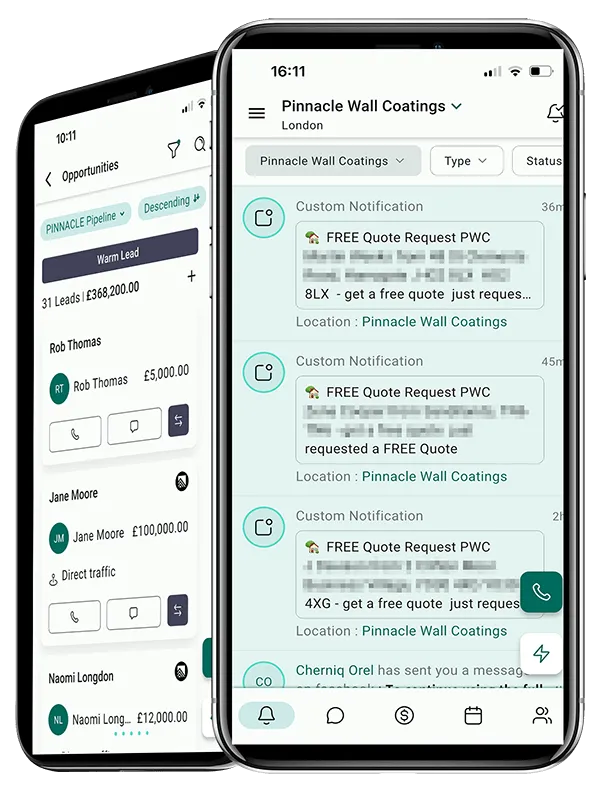
Step 3 - Lead Notifications
I'll design, build, host and manage high converting sales funnel for your business that turns visitors into sales.
I'll use the exact same high-converting funnel templates that I've used to generated over $3M worth of business over the last few years.
No more static 'brochure-style' websites that don't generate laser focused, highly-qualified leads.
You'll get a high converting sales funnel and website that generates
leads on auto-pilot.
Step 4 - Performance Managment
I'll build, manage and optimise a series laser targeted SEO, Google Ads, Meta Ads, Organic Social & Automated Email campaigns to maximise your exposure across all relevant channels to attract a steady flow of highly qualified leads.
- Google Search
- Google Ads
- Facebook Ads
- Instagram Ads
And wherever else your target audience hangs out online.
Step 4 - Performance Management
I'll build, manage and optimise a series laser targeted SEO, Google Ads, Meta Ads, Organic Social & Automated Email campaigns to maximise your exposure across all relevant channels to attract a steady flow of highly qualified leads.
- Google Search
- Google Ads
- Facebook Ads
- Instagram Ads
And wherever else your target audience hangs out online.
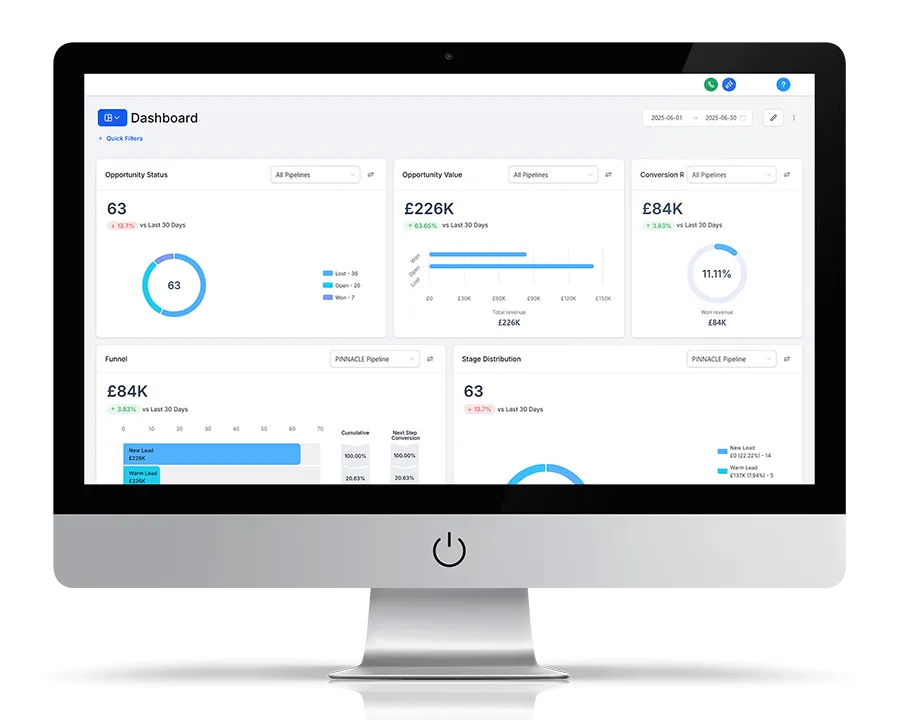
Step 5 - Scaling & Optimisation
We work together and I scale and optimize marketing budget for consistent and predictable sales growth.
Instead of burning money on marketing, let me build you a scalable, automated customer acquisition machine that works even while you sleep and only costs you when you close leads.
Case Study

From £17K To £100K+ Per Month In Just 3 Months
Company: An exterior wall coating company covering the whole of England & Wales.
Problem: Low converting WordPress website and had tried multiple agencies and so called experts at great expense with no success in generating leads whatsoever.
Solution: High converting sales funnel and nationwide lead generation solution with expert SEO, Google and Meta/Facebook ads optimisation and management.
Payment Option: Revenue Share
Results: 623.5% YOY Monthly Revenue Growth. Blended revenue ROAS of 2080%

"Exceptional Results"
Working with RSD completely transformed the way we win leads and new business. Before, we were stuck in a vicious circle of trying and failing with multiple agencies and inconsistent enquiries.
Within weeks of partnering, we started receiving a steady flow of high-quality, exclusive leads that were actually ready to buy—not just tyre kickers. The transparency, honesty, and attention to detail have been second to none.
What really stands out is the ROI. For every pound we’ve invested in marketing, we’ve seen many times that back in confirmed jobs.
We’ve closed projects we never would have reached without this and have added six figures to our monthly turnover.
If you’re serious about growing your business, this isn’t just another ‘lead gen service’—it’s a true partnership. RSD delivers exactly what it promises, and I honestly can’t recommend this partnership highly enough."*
— J. Jackson, Partner - Pinnacle Wall Coatings
How Motor Vehicle Accident Lead Generation Works for Growth-Focused Law Firms.
By K Atkinson.
Founder, MVA Leads Direct
Specialising in state-level personal injury acquisition and scalable MVA case infrastructure
Introduction.
How Motor Vehicle Accident Lead Generation Works for Growth-Focused Law Firms.
Motor vehicle accident lead generation is not simply about buying names and phone numbers. It is a structured acquisition system designed to deliver intake-ready case opportunities at a predictable cost per retained case.
For established personal injury firms, the decision is not whether leads work. It is whether the economics scale.
When properly structured, MVA lead acquisition allows firms to:
- Control monthly case volume
- Expand into new states without opening offices
- Diversify away from referral dependency
- Model acquisition cost against average case value
- Scale faster than organic or referral-only growth allows
However, outcomes depend on four variables:
- Lead distribution model — exclusive vs shared
- Media cost environment in each state
- Intake conversion velocity
- True cost per retained case, not cost per lead
This guide breaks down how motor vehicle accident lead generation actually works at scale, how serious firms evaluate it, and when it makes strategic sense to deploy it.
01
The Economics of Motor Vehicle Accident Acquisition.
Before discussing funnels, platforms, or vendors, we need to address the only metric that matters to experienced operators:
Cost per retained case.
Lead cost alone is meaningless.
A $250 lead with a 5 percent close rate is more expensive than a $600 lead with a 20 percent close rate. Sophisticated buyers model acquisition around retained case economics, not vanity metrics.
The Core Formula
At scale, most firms evaluate MVA acquisition using:
Cost Per Retained Case = Cost Per Lead ÷ Close Rate
Example:
- Lead cost: 400
- Close rate: 15 percent
- Effective cost per signed case: approximately 2,667
This number must sit comfortably beneath:
- Average case value
- Cash flow tolerance
- Portfolio risk appetite
When firms report that lead buying does not work, the problem is rarely the channel. It is almost always intake inefficiency or unrealistic economic modelling.
For a deeper breakdown of benchmarking methodology, see our analysis on cost per retained auto accident case and how firms protect margin while scaling.
02
Why Close Rate Is the Hidden Lever.
Nationally, close rates on properly filtered exclusive MVA leads often cluster around the mid-teens. Shared leads trend lower due to competition and contact delays.
Close rate is influenced by:
- Speed to first contact
- Representation checks
- Liability clarity
- Insurance verification
- Intake training and scripting
A firm closing 18 percent can outbid a firm closing 10 percent all day long. That difference alone determines who can scale aggressively in competitive states.
This is why improving close rate on auto accident leads is often more profitable than trying to negotiate lower CPL.
03
Exclusive vs Shared Lead Models.
Not all motor vehicle accident leads are structured the same way.
Understanding distribution mechanics is critical.
Exclusive Distribution
Exclusive leads are delivered to one firm only.
Advantages:
- No intake race
- Higher contact probability
- Better client experience
- Stronger brand positioning
Trade-offs:
- Higher cost per lead
- Volume limitations in smaller states
For growth-focused firms buying 30 to 100 plus cases per month, exclusivity reduces friction and stabilizes modelling.
A detailed comparison can be found in our breakdown of exclusive vs shared car accident leads and how each impacts retained case cost.
Shared Distribution
Shared leads are sold to multiple firms simultaneously.
Advantages:
- Lower upfront CPL
- Higher top-of-funnel volume
Risks:
- Intake speed race
- Lower close rate
- Client fatigue
- Brand dilution
Shared models can work when intake teams are aggressive and disciplined. However, they compress margins quickly when follow-up systems are weak.
04
Media Cost Variance by State.
Motor vehicle accident acquisition does not scale uniformly across the United States.
California does not behave like Tennessee.
Florida does not behave like Colorado.
Each state has:
- Different media cost environments
- Different competitive density
- Different insurance structures
- Different regulatory considerations
For example:
- Large urban markets drive higher CPC volatility
- No-fault states affect claim dynamics
- Jury award environments influence case valuation
This is why state-level execution matters. A centralized national campaign without segmentation almost always underperforms.
Firms expanding strategically often use structured state-specific auto accident lead acquisition to test jurisdictions before committing deeper resources.
05
Where These Leads Actually Come From.
Most MVA leads are generated through paid acquisition channels:
- Google Search
- Meta platforms
- YouTube pre-roll
- Display retargeting
- Landing page funnels
The difference between scalable systems and unstable ones lies in:
- Media buying discipline
- Funnel optimization
- Qualification logic
- Real-time routing
- Compliance filtering
This is not random traffic arbitrage. At scale, it is structured performance marketing governed by cost control and conversion analytics.
For firms evaluating whether to outsource or internalize acquisition, we examine the trade-offs in PPC vs buying MVA leads and how economics differ across models.
06
When Buying Leads Makes Strategic Sense.
Motor vehicle accident lead acquisition typically makes sense when:
- A firm has intake staff capacity
- Cash flow can tolerate acquisition cycles
- Close rates are measurable
- Leadership wants predictable case volume
It is less effective when:
- Intake is inconsistent
- Follow-up is delayed
- Case selection criteria are unclear
- Expectations are unrealistic
Lead buying does not fix operational weaknesses. It amplifies them.
But for structured firms with disciplined intake, it becomes one of the most controllable growth levers available.
07
Intake Systems and Conversion Velocity.
Motor vehicle accident acquisition is rarely limited by traffic quality. It is limited by operational response.
In competitive MVA environments, prospects do not wait patiently for one firm to call them back. Many submit multiple enquiries within a short time window, especially in larger metropolitan areas. The firm that establishes early contact shapes the conversation and, more often than not, controls the outcome.
This is why response time directly influences retained case economics.
When contact is made quickly, connection rates are significantly higher. When outreach is delayed, the probability of engagement declines sharply. By the following day, many opportunities have already been absorbed by faster competitors.
The operational gap between firms often comes down to structured intake discipline. High-performing teams typically operate with:
- Immediate call attempts upon lead receipt
- Rapid secondary outreach via SMS
- Defined early follow-up cadence within the first hour
- Intelligent routing by geography and case type
The compounding effect of even small close-rate improvements is substantial. A five-point lift in conversion may reduce effective cost per retained case by hundreds of dollars. Over meaningful monthly volume, that margin difference becomes strategic.
Lead generation does not compensate for slow intake. It exposes it.
08
Qualification Logic and Case Appetite.
Every acquisition system balances volume against precision.
Stricter qualification reduces intake waste but increases cost per lead. Broader filtering expands top-of-funnel opportunity but increases internal screening workload.
The decision should not be based on preference. It should be grounded in case economics.
Qualification variables typically revolve around factors such as accident recency, liability clarity, representation status, insurance indicators, and injury signals. Adjusting any one of these shifts the acquisition equation.
A narrower intake filter may increase average CPL while improving case value consistency. A broader filter may reduce upfront cost while widening case value variance. Neither approach is inherently superior.
The strategic question is whether acquisition input aligns with portfolio output.
Firms that attempt to impose maximum filtering while demanding maximum volume at minimum cost often experience friction. Media markets respond to competition and expected case value. When expectations are misaligned with market dynamics, disappointment follows.
Strong operators treat qualification logic as economic modelling rather than quality preference.
09
Building an In-House Funnel Versus Leveraging External Infrastructure.
The appeal of internal control is understandable. Managing paid search and social campaigns directly offers visibility into spend, creative direction, and messaging alignment.
However, multi-state MVA acquisition is not static. Auction dynamics fluctuate. Cost-per-click varies by region and season. Platform compliance standards evolve without warning. Creative fatigue can erode performance unexpectedly.
An internal team must manage campaign segmentation, testing cycles, landing page optimization, call tracking infrastructure, and attribution modelling. These are not light responsibilities. They require dedicated expertise and continuous oversight.
For firms without mature marketing infrastructure, the volatility of direct media management can become distracting from core legal operations.
External structured acquisition shifts responsibility for media buying, funnel optimization, and platform adaptation outward. The firm pays for stabilized intake rather than absorbing direct platform risk. The trade-off is margin in exchange for insulation.
The strategic evaluation should consider internal capability, appetite for volatility, and long-term expansion objectives rather than ideological preference for ownership.
10
Performance Measurement Beyond Cost Per Lead.
Cost per lead is only the entry point into acquisition analysis. It does not capture intake efficiency, case quality, or geographic variance.
Advanced firms track performance across multiple layers of data so that decisions are analytical rather than reactive.
The most important indicators typically include:
- Cost per retained case
- Close rate by jurisdiction
- Time from lead receipt to contact
- Time from contact to signed engagement
- Average case value by geography
These variables allow firms to treat acquisition as a portfolio rather than a single blended metric.
A state with slightly higher CPL may produce stronger retained case economics. Another state may show acceptable CPL but declining close rates due to intake delays. Without layered analysis, these distinctions are invisible.
With disciplined measurement, scaling becomes controlled expansion rather than speculative spending.
11
Multi-State Expansion as Portfolio Strategy.
Motor vehicle accident acquisition behaves differently across jurisdictions. Media competitiveness, population density, insurance norms, and litigation culture all influence performance.
Blending these variables into one national average conceals meaningful differences. It can make strong markets appear weaker or allow underperforming states to hide behind blended numbers.
Sophisticated firms instead isolate each state as its own acquisition unit. Budget allocation is determined by retained case economics within that jurisdiction. Performance is evaluated locally before expansion decisions are made.
This portfolio approach stabilizes growth. It allows firms to expand in stronger markets while refining or pausing weaker ones. It also provides a controlled method for testing new jurisdictions before committing physical infrastructure or deeper operational investment.
When structured properly, multi-state MVA acquisition becomes a mechanism for disciplined geographic expansion rather than opportunistic marketing.
12
Risk, Compliance and Reputational Safeguards.
Motor vehicle accident acquisition operates inside a regulated environment. That reality cannot be treated as a footnote.
Bar advertising rules, consent standards, data handling requirements, and non-representation disclosures all sit underneath the surface of every paid campaign. A firm may never see the underlying media mechanics, but it is still responsible for the cases it signs.
Compliance risk generally appears in three forms.
First, marketing language that implies guaranteed outcomes or misrepresents attorney involvement.
Second, improper consent capture or unclear disclosure of how information will be used.
Third, recycled or re-sold leads that create confusion around representation status.
None of these issues are theoretical. They are structural risks that must be evaluated before scaling.
When assessing a lead source or acquisition model, firms should examine:
- How consent is captured and documented
- Whether representation status is verified prior to delivery
- How duplicates are handled
- What disclosures are presented to prospects
- How data is stored and transferred
A disciplined acquisition system protects both economics and reputation. Cost savings are irrelevant if reputational damage follows.
Compliance is not simply a legal requirement. It is a stability requirement.
13
Risk, Compliance and Reputational Safeguards.
Not all lead ecosystems are equal. Some are engineered for sustainable intake. Others are engineered for volume at the expense of long-term performance.
Warning signs often emerge gradually.
Excessively broad filtering may produce large numbers of enquiries but weak liability signals. Inconsistent timestamp documentation can obscure delivery timing. High rates of uncontactable leads may signal shared distribution saturation. Unclear geographic segmentation can dilute state-level performance modelling.
Low-quality ecosystems typically display patterns such as:
- Rapid CPL decreases followed by close rate erosion
- Inconsistent lead origin explanations
- Unusually high duplicate rates
- High intake fallout without clear reason
The danger is not always immediate financial loss. It is instability. Acquisition that cannot be measured, audited, or segmented cannot be scaled safely.
Experienced firms evaluate lead environments not only by cost, but by structural transparency.
14
Modelling Risk Before Scaling.
Scaling MVA acquisition without modelling risk is one of the most common strategic errors.
Before increasing budget or expanding into new jurisdictions, firms should evaluate:
- Cash flow tolerance for acquisition cycles
- Intake staffing capacity under volume pressure
- Geographic variance in case value
- Sensitivity of retained case cost to small close-rate shifts
Even minor close-rate fluctuations can materially alter effective case cost. A drop from 16 percent to 13 percent conversion may appear small, but at scale it can compress margin quickly.
Risk modelling forces clarity.
What happens if:
- Media cost rises 15 percent in a competitive state?
- Close rate declines by three points?
- Average case value shifts downward?
If the acquisition model remains viable under stress scenarios, scaling becomes rational. If it collapses under modest variance, refinement is required before expansion.
Motor vehicle accident acquisition should be treated as a portfolio with defined risk tolerance, not a gamble on short-term performance.
15
When Lead Acquisition Becomes Strategic Infrastructure.
At low volume, buying leads feels tactical. It fills gaps. At scale, it becomes infrastructure.
When firms begin forecasting monthly intake targets, modelling retained case cost across states, and aligning staffing with predictable inflow, acquisition transitions from marketing channel to supply chain.
This shift is subtle but powerful.
Rather than asking, “Are leads working this month?” leadership begins asking, “Which states deserve additional allocation?” or “Where can retained case cost be optimized through intake adjustment?”
In that context, motor vehicle accident lead generation is no longer experimental. It is a controllable expansion mechanism.
It allows firms to:
- Enter new jurisdictions without physical expansion
- Diversify away from referral concentration
- Stabilize intake across seasonal fluctuations
- Compete aggressively in high-value markets
The firms that scale consistently are rarely the ones chasing the lowest CPL. They are the ones who understand their economics deeply enough to bid confidently and respond quickly.
Acquisition maturity is less about traffic source and more about strategic clarity.
To Summarize.
Motor vehicle accident lead generation is not about buying volume. It is about structuring economics.
It works when:
- Close rate is understood and optimized
- Qualification aligns with case appetite
- State-level variance is segmented rather than blended
- Intake response is treated as a performance lever
- Compliance and transparency are built into the system
- Risk is modelled before scaling
It fails when firms focus on cost per lead without understanding cost per retained case.
For growth-focused personal injury firms with operational discipline, structured MVA acquisition becomes one of the most controllable levers available. It allows predictable expansion, geographic diversification, and scalable case flow when executed with clarity.
The decision is not whether leads “work.”
The decision is whether the firm is prepared to model, measure, and manage them properly.
Frequently Asked Questions.
01
How Many MVA Leads Should a Firm Start With?
Volume should align with intake capacity and cash flow tolerance. Many established firms begin with controlled monthly allocations and expand once retained case cost stabilizes.
02
What Is a Realistic Close Rate for Motor Vehicle Accident Leads?
Close rates vary by state and intake discipline. Exclusive, well-filtered leads often cluster in the mid-teens nationally, though performance depends heavily on response speed.
03
Are Exclusive Leads Always Better Than Shared Leads?
Typically yes. Exclusive leads reduce competition and typically improve contact rates, but shared leads can sometimes perform when intake teams are highly aggressive and disciplined.
04
How Long Does It Take to Evaluate Performance Accurately?
Acquisition should be evaluated over sufficient volume to smooth volatility. Judging performance on a handful of leads rarely produces reliable conclusions. 3 months is usually ideal or around 100 leads.
05
Can Smaller Firms Compete in High-Cost States?
Yes, if close rate and intake discipline are strong. Firms with higher conversion efficiency can compete even when media costs are elevated.
06
Is It Better to Run PPC Internally or Buy Leads?
The answer depends on internal marketing capability and appetite for volatility. Internal control offers transparency but requires expertise and tolerance for fluctuation.
07
What Causes Most MVA Lead Programs to Fail?
Common causes include delayed intake response, unrealistic case value assumptions, insufficient tracking, and misaligned qualification filters.
08
Does State Regulation Affect Lead Performance?
Indirectly, yes. Advertising competitiveness, insurance structures, and litigation culture influence acquisition economics and must be modelled accordingly.
09
How Should Firms Handle Multi-State Expansion?
Each state should be treated as an independent acquisition unit with its own performance modelling rather than blended into one national average.
10
What Is the Most Important Metric to Track?
Cost per retained case remains the most reliable indicator of acquisition health, provided it is measured consistently and segmented by geography.
This service is not designed to be everything for everyone. It is built for firms that take inbound acquisition seriously and measure success where it actually matters — at the case level.
Blog.
MVA acquisition is not a marketing tactic — it is an economic system. While pricing is set at the lead level, outcomes are determined downstream by intake execution, follow-up velocity, qualification discipline, and cost-per-retained-case modelling. This section explores the operational mechanics behind scalable motor vehicle accident lead generation for growth-focused personal injury firms.
How Motor Vehicle Accident Lead Generation Works for Growth-Focused Law Firms.
Motor vehicle accident lead generation is not simply about buying names and phone numbers. It is a structured acquisition system designed to deliver intake-ready case opportunities at a predictable cost per retained case...
PPC vs Buying MVA Leads: Which Model Actually Scales for Personal Injury Firms?
For established personal injury firms, the PPC versus bought-leads debate is rarely philosophical. It’s operational. Both models can produce signed cases. Both models can also quietly bleed margin...
Cost of Motor Vehicle Accident Leads: What PI Firms Should Really Expect to Pay.
A $350 lead with poor intake conversion can be more expensive than a $700 lead that converts consistently. A high-cost state with strong case value may outperform a lower-cost state with weaker recoveries...
Exclusive vs Shared Motor Vehicle Accident Leads: A Strategic Decision...
The decision between exclusive MVA leads and shared motor vehicle accident leads is not a pricing comparison. It is a structural acquisition decision that affects cost stability, intake pressure, capital exposure, and long-term portfolio scaling...
03
Blog Post Title Goes Here
At scale, MVA campaigns stabilise around a 15% close rate when intake is consistent and volume is sufficient. This reflects real-world performance across competitive U.S. markets, factoring in normal variation in traffic quality, response times, and follow-up — not idealised conditions or short-term tests.
04
Blog Post Title Goes Here
A $2,000 - $2.5K case cost represents sustainable, all-in acquisition at scale, absorbing normal CPL volatility and seasonal swings. It reflects outcome-level performance where experienced buyers measure success — at the signed case, not the lead.
Start With a Controlled Validation Trial...
Before scaling, lead delivery begins with a controlled initial meaningful volume designed to validate quality, intent, and operational fit under real intake conditions — with your team, your routing, and your cadence.
There is no long-term obligation. The trial exists to confirm that lead quality, delivery speed, and conversion dynamics align with your firm’s expectations before increasing volume or expanding into additional states.
Minimum trial investment: $15,000+ upfront.
This is not a proof-of-concept. It is a structured validation period with clear parameters and measurable outcomes.
Exclusive leads - no sharing.
Intent strength at meaningful volume.
Delivery speed into your intake workflow.
Operation fit before committing to higher volume.
No retainers - no long term lock-ins.
Following the initial delivery period, pacing and volume can be adjusted based on performance, intake capacity, and commercial fit. This may include increased lead volume, modified delivery parameters, or expansion into additional states.
The objective is simple: predictable, scalable MVA lead supply — without unnecessary risk on either side.